Tom’s Father’s Federal Scandal and Arrest
Off CampusTom’s father’s federal scandal and arrest are the public catastrophe behind Tom’s homelessness, disrupted education, and fear of exposure. The case makes the Worthington name a news story, while frozen assets leave Tom unable to rely on the family’s wealth. Its consequences endure beyond the arrest: reporters’ scrutiny and Tom’s own learned vigilance shape how he returns to college, understands institutional support, and approaches intimacy with Reese.
The scandal and its public reach
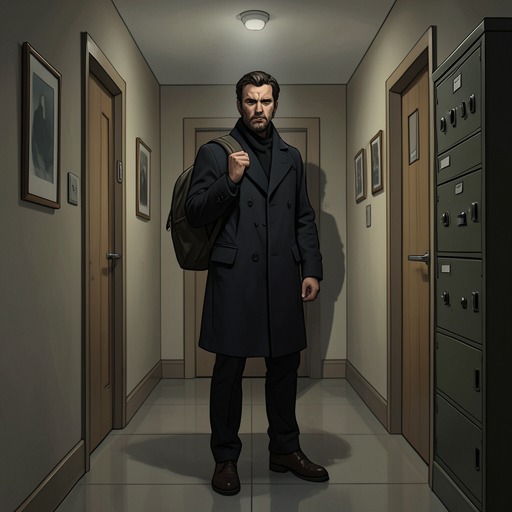
The case is described as the largest price-fixing takedown in the history of white-collar-crime undercover stings. Tom’s father’s arrest by federal agents made a search for the name Worthington return pages of coverage. For months, Tom’s father and the scandal occupied front pages across the country. The press attention intensified after his father attempted suicide while under house arrest; Tom, home from college after the school asked him to leave as reporters swarmed campus, found him unconscious beside an empty pill bottle and a mostly empty glass of Scotch and called 911.
The scandal also transformed Tom from a student into a conspicuous extension of his father’s story. At the family’s Beacon Hill home, reporters repeatedly confronted him, and their presence made even leaving the property difficult. When one reporter asked whether Tom had known his father was embezzling money, the question was designed to provoke a revealing response. After Tom argued angrily that his father was innocent, he watched footage of himself on television and saw how his protests could look like a cover-up. The family’s imposing townhouse and fence reinforced an image of inherited privilege, making his distress easy to read as a rich son objecting to the loss of his advantages.
A public-relations adviser tried to teach Tom how words could be recast by the press and urged him to say nothing. Tom’s later recollection of that media coaching sits alongside his memories of reporters outside the family home: silence was not simply a preference, but a defensive response to an environment in which any statement could be turned against him. The press could also intrude without entering the property. Tom recalls that crews remained outside around the clock and that, after he drank heavily, he discovered they had gone through his trash.
Financial and educational consequences
The family’s assets were frozen after the Ponzi scheme, leaving Tom convinced that he could not finish college unless he paid his own way. He spent months sleeping in his car and driving an unlicensed taxi for cash, preparing to continue his education by supporting himself. The contrast between the image of the wealthy heir and the practical insecurity of a student without stable housing is central to the scandal’s effect on him: the family’s former status remains publicly visible even as its resources are inaccessible to him.
Tom’s return to Carlisle carries the pressure of that publicity. He says the dean had told him in writing that he would be removed if his presence caused a press circus. That belief feeds his effort to stay off people’s radar and makes the possibility of further attention feel like a threat to his place at school. Yet the dean’s actual letter does not mean what Tom fears it means. When she later walks him through it, she explains that she had been advising him how to protect himself and enjoy the year, not making him responsible for shielding the college from disruption. She also objects to his assumption that she would threaten him with expulsion because of circumstances beyond his control. The episode distinguishes real media pressure from Tom’s expectation that every institution will use its power against him.
Secrecy, relationships, and the return of the past
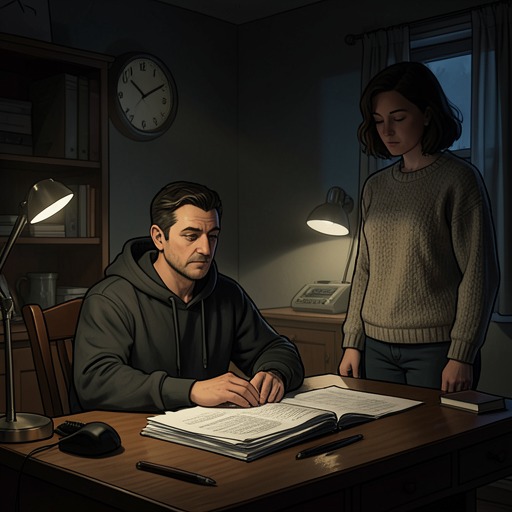
The scandal enters Tom and Reese’s relationship through the question of what can safely be disclosed. Reese had not searched Tom’s name, and Tom realizes that the arrest and the suicide attempt could not remain hidden for long. He considers the brief reprieve of withholding the story, but knows Reese could ask the housing office who his new roommate is. His fear of being reduced to a sensational headline makes disclosure feel less like ordinary conversation than another loss of control over his public identity.
When Reese explains why he lives in Perkins House, he says the school had to make that arrangement before his father would allow him to return, and to keep the matter from reaching the press. Reese then tells Tom about the assault by his former roommate and the roommate’s friends, explaining that he did not report it immediately and that the school could do little after the fact. The two men’s histories are distinct, but both connect private vulnerability to the prospect of public exposure and to uncertainty about whether the school will protect them. Tom listens rather than pressing Reese for more detail, while his own history helps explain why he is alert to the costs of telling a story that may not remain private.
That fear later constrains Tom’s willingness to be seen with Reese. He says the dean’s warning is in writing and imagines that a photograph of him with a boyfriend would bring the paparazzi back. He has already treated his father’s scandal as a reason to avoid attention; now the same logic threatens to make a relationship another secret. Tom’s concern is not simply that an individual might know he is with a boyfriend. At an LGBTQ student organization meeting, he distinguishes that private knowledge from the scale of exposure that comes when many people know and discuss his personal life. He acknowledges that the prospect of that wider audience frightened him.
Aftermath and narrative significance
The scandal’s afterlife is visible in the way Tom interprets new situations. A ringing landline in his room startles him; the sound recalls how little he expects to be contacted, after changing his phone number following his father’s arrest and before the suicide attempt. Most of his former friends had disappeared along with his money and pride. The detail makes his isolation concrete: public attention and private abandonment arrive together, leaving him wary of both being noticed and being reached.
The publicity also supplies Tom with an explanation for withdrawal that is real but incomplete. Looking back, he wonders whether the invasive attention around his father’s arrest and trial gave him a convenient reason to narrow his life just as he was supposed to be opening it up. He had been able to point to the threat outside the door instead of facing other fears, including uncertainty about life after graduation and about whom he might want to share it with. This does not make the press intrusion imaginary; it shows how an actual danger can become a broader defense against vulnerability.
The scandal therefore remains active after the arrest rather than closing with a legal or financial event. It has altered Tom’s material circumstances, damaged his social connections, and taught him to anticipate that private life can be turned into public spectacle. His developing relationship with Reese and his later effort to speak openly about privacy challenge that inherited reflex. The story’s central tension is not simply whether the press will return, but whether Tom can distinguish the genuine risk of exposure from the self-isolation that risk has come to justify.